Louise Wise: Historical Fiction
Showing posts with label Historical Fiction. Show all posts

Sunday, 12 May 2019

WWBB loves a 'How To' guest post, and if you need a few tips on dialogue writing you've come to the right place! @rararesources #historical #fiction #author #giveaway #win #comp


How to write dialogue without it being stilted
by
Carolyn Hughes

A few years ago, when I was on an author panel, I was asked how I dealt with language, given that my novels are set in the 14th century, a time when people didn’t speak English as we know it, but spoke either Middle English, a form of French, or Latin, depending on their social status and education. It’s a question that had exercised me a good deal. When I first started writing historical fiction, I wondered whether to try giving my characters “authentic”-sounding voices, or put modern language in their mouths. If my characters spoke in modern English, was it bound to give the impression they also had modern mindsets? Conversely, if I gave them dialogue that purported to “sound like”, say, 14th-century English, would that inevitably suggest they also have authentic 14th-century mindsets? I don’t think either case is necessarily true.
Hilary Mantel once said that too much period flavour slows the story and may even make readers laugh. When we’ve little idea how people actually spoke in the distant past, we must simply imagine it. Mantel recommended ‘a plain style that you can adapt…not just to [your characters’] ages and personalities and intelligence level, but to their place in  life.’ Her use of modern English (in Wolf Hall, for example) is slightly askew, with a sprinkling of unusual words to give ‘a suggestion of otherness’. I’ve come to realise that the majority of historical novels are in fact written in reasonably straightforward modern English, though whether the mindsets that the words convey are authentic depends on other factors.
I generally follow Mantel’s advice. The language I put into my characters’ mouths is broadly modern English, with some slightly “old-fashioned” phrasing just to give a sense of the past. Some historical authors avoid contracted forms (isn’t, don’t…), on the grounds that they seem to give the voices too modern a tone. However, I’ve chosen to use more formal, non-contracted, forms for higher status or educated characters, but to reflect the voices of the peasantry with more informal contractions. It’s a relatively crude distinction, but it works for me.
I really enjoy writing dialogue. I follow the general writerly advice about keeping dialogue tags (he said, she said) to a minimum without omitting them altogether, and to use tags other than “said”, such as “whispered” or “shouted” very sparingly. But I do include “beats”, bits of action or gestures that reflect or explain the speaker’s mood. I think they break up the dialogue in a realistic way, and keep it lively and moving forward. I do also try to introduce a little light-heartedness where I can, as I feel it helps to bring out the characters’ personalities.
I try to ensure that what my characters say does reflect their likely mindsets, so no inappropriately feminist musings or impossibly anachronistic thinking!
Here’s a short section of dialogue from De Bohun’s Destiny. The speakers are two sisters. One of them clearly has a little problem; the other doesn’t know whether to be shocked or gleeful… (It isn’t going to turn out well…) 
Matilda…was crouched over a basin, vomiting. Suddenly there came a light knocking on the door, and Margery called out to her.
‘Are you all right in there, Matilda?’
Matilda groaned. She thought Margery had gone out to the market, although there was no way Matilda was going to be able to keep this from her sister, as the sickness came too often for her to hide.
‘Well enough, thank you, sister,’ she called back. ‘Leave me be.’
And it seemed that Margery had gone back downstairs. But when it happened again the following morning, Margery would not be dismissed. She opened the door of the garderobe and entered.
Matilda thought it served her sister right for interfering, when she saw her gag on the vile smell arising from the basin.
‘Oh, my goodness, Matilda,’ said Margery, ‘what on earth is happening?’
‘Isn’t it obvious? I’m sick.’
‘But why? Something you’ve eaten?’
Matilda brightened a little. ‘Yes, perhaps so.’
Margery nodded, but then she frowned. ‘But hasn’t this been going on for days? And aren’t you only nauseous in the mornings?’
Matilda looked up at her sister, wishing she’d just disappear – down through the hole in the garderobe floor, perhaps, onto the stinking mound of s**t.
But it was clear that Margery had guessed the truth. ‘I wondered why you haven’t washed out any rags the past few weeks.’ She smirked.
‘Don’t tell Pa,’ said Matilda, a slight panic rising in her chest.
‘How will that help you? Do you imagine you can keep your sin and shame from him?’
‘Damn you, Margery, you’re such a prig!’
Margery sniffed. ‘But not a slut. Nor some man’s disgusting whore. Nor a vile sinner.

De Bohun’s Destiny
How can you uphold a lie when you know it might destroy your family?

It is 1356, seven years since the Black Death ravaged Meonbridge, turning society upside down. Margaret, Lady de Bohun, is horrified when her husband lies about their grandson Dickon’s entitlement to inherit Meonbridge. She knows that Richard lied for the very best of reasons – to safeguard his family and its future – but lying is a sin. Yet she has no option but to maintain her husband’s falsehood... 
Margaret’s companion, Matilda Fletcher, decides that the truth about young Dickon’s birth really must be told, if only to Thorkell Boune, the man she’s set her heart on winning. But Matilda’s “honesty” serves only her own interests, and she’s oblivious to the potential for disaster.
For Thorkell won’t scruple to pursue exactly what he wants, by whatever means are necessary, no matter who or what gets in his way…

If you enjoy well-researched, immersive historical fiction, with strong female characterisation and a real sense of authenticity, you’ll love De Bohun’s Destiny, the third Meonbridge Chronicle, set in the mid-14th century, in the turbulent and challenging years that followed the social devastation wrought by the Black Death. Discover for yourself if, in Meonbridge, it is Margaret or Matilda, right or might, truth or falsehood, that wins the day...

CAROLYN HUGHES was born in London, but has lived most of her life in Hampshire. After completing a degree in Classics and English, she started her working life as a computer programmer, in those days a very new profession. But it was when she discovered technical authoring that she knew she had found her vocation. She spent the next few decades writing and editing all sorts of material, some fascinating, some dull, for a wide variety of clients, including an international hotel group, medical instrument manufacturers and the government.
She has written creatively for most of her adult life, but it was not until her children grew up and flew the nest several years ago that writing historical fiction took centre stage in her life. She has a Master’s degree in Creative Writing from Portsmouth University and a PhD from the University of Southampton.
De Bohun’s Destiny is the third novel in the MEONBRIDGE CHRONICLES series. A fourth novel is under way.
You can connect with Carolyn through her website www.carolynhughesauthor.com and social media:

Social Media Links – 

Facebook: CarolynHughesAuthor; Twitter: @writingcalliope; Goodreads: http://bit.ly/2hs2rrX


Giveaway to Win a $15 / £15 / €15 Amazon Gift Card 
(Open Internationally)

*Terms and Conditions –Worldwide entries welcome.  Please enter using the Rafflecopter box below.  The winner will be selected at random via Rafflecopter from all valid entries and will be notified by Twitter and/or email. If no response is received within 7 days then Rachel’s Random Resources reserves the right to select an alternative winner. Open to all entrants aged 18 or over.  Any personal data given as part of the competition entry is used for this purpose only and will not be shared with third parties, with the exception of the winners’ information. This will be passed to the giveaway organiser and used only for the fulfilment of the prize, after which time Rachel’s Random Resources will delete the data.  I am not responsible for despatch or delivery of the prize.


OR if you don’t like html or are on WordPress


Friday, 8 February 2019

An author interview, an Amazon gift card, an AMAZING new book to check out! @RachelBrimble @rararesources #win #historical #fiction #Suffragettes


A Rebel at Pennington’s

by

Rachel Brimble


One woman's journey to find herself and help secure the vote. Perfect for the fans of the TV series Mr Selfridgeand The Paradise.


1911 Bath. Banished from her ancestral home, passionate suffrage campaigner, Esther Stanbury works as a window dresser in Pennington's Department Store. She has hopes and dreams for women's progression and will do anything to help secure the vote. 


Owner of the prestigious Phoenix Hotel, Lawrence Culford has what most would view as a successful life. But Lawrence is harbouring shame, resentment and an anger that threatens his future happiness.


When Esther and Lawrence meet their mutual understanding of life's challenges unites them and they are drawn to the possibility of a life of love that neither thought existed.
With the Coronation of King-Emperor George V looming, the atmosphere in Bath is building to fever pitch, as is the suffragists' determination to secure the vote.


Will Esther's rebellious nature lead her to ruin or can they overcome their pasts and look to build a future together?


An interview with the author of A Rebel at Pennington’s - Rachel Brimble
Hello Rachel, and welcome to WWBB. Tell us about the publisher. Who are they and what are they like to work with? 
When I signed a four-book contract with Aria Fiction in January 2018, it was my first time working with them and, I have to say, they have been absolutely fantastic. My editor completely understands my vision for the Pennington’s series and fully supports my ideas and plans. Her revision notes only serve to make my work stronger and her suggestions are always spot-on. 
I also work with the digital/PR person at Aria and she, too, is so good. Lots of great marketing ideas and encouragement. 
I would DEFINITELY recommend Aria Fiction to other authors – no question. 
That’s fantastic. It’s always good to have that rapport with editors. Can you tell us how you dealt with rejection letters in the past or bad reviews in general? 
Quick answer is ‘read them and move on’ – the not so quick answer… Rejection letters and bad reviews are part of the business, unfortunately. Even the bestsellers or books that become ‘classics’ have been rejected and received bad reviews. Writing, like any of the arts, is subjective. People will like, love or hate your work. There is absolutely nothing you can do to change that so, of course, read the feedback and decide if you wish to take any comments onboard and then…move on! 
What’s your least favourite part of the writing process? 
The middle of the book – every time! A Rebel at Pennington’s is my 20th published novel and, after writing for thirteen years, my process has grown and changed to the point that I now have a system that works for me. However, it doesn’t matter how much I plot out my books before I start writing (I am a total plotter!), I always hit the 40,000 word mark and things start to spin out of my control for a while. The characters either take over and go off in a different direction I wasn’t expecting, or they might reveal something about themselves I hadn’t factored and this ‘thing’ changes the whole dynamic of the novel. 
Writing is hard, frustrating and apt to make the author cry sometimes (truth!), BUT I love it and will never stop. 
And the best part? 
There are two best parts for me – first, typing ‘The End’ when the first draft is finished. This is my absolute bliss time. A fully-written book is so much easier to tweak, cut and change than a ream of blank pages. I love working on the words I’ve already written and making them better. The second is receiving my cover for the first time. That always means the book is actually happening and, before long, readers will be reading it. I’ve been lucky with my covers so far and like them all. Long may it last! 
Promoting is something ALL authors struggle with. How are you managing yours? 
Promotion is definitely one of the most difficult aspects of the business – I’m yet to find a way that ‘works’ so I try my best and hope it means readers find my books. I am on Facebook, Twitter and Instagram where I make sure I post regularly as well as ensuring I set up blog tours in the UK and US whenever I have a new release. Engagement with your audience is paramount and there is nothing I love more than chatting with readers! 
Does writing energize or exhaust you?
Energise, definitely! Writing is my lifeline. The thing that makes me happy and brings me joy. Writing stopped being a choice for me about ten years ago. Instead, it became a compulsion. Something I HAVE to do. I even take my laptop on holiday these days – believe me, it’s much better this way. If I have to go three consecutive days without writing, I turn into a savage. Ask my husband and children, lol!

And why did you write A Rebel at Pennington’s? Was there a spark that made you put pen to paper (or fingers to keyboard)?
I have always been passionate about women’s rights and equal rights, so I knew very early on I wanted to write a series with a ‘female empowerment’ theme. I loved watching the TV series, Mr Selfridge, but I always wanted the female characters to be explored more deeply, to find out more about their issues and frustrations. The first book (The Mistress Of Pennington’s) covers Edwardian women in business and this book, A Rebel At Pennington’s, covers the women’s suffrage movement. We should never forget the struggle these women went through to secure the right to vote. So many women suffered for something that would ultimately benefit women forever.
OMG! It sounds fab! Go on… give me the first, middle and end line in your book.
First: In a small post office situated in one of the many back alleys that wound like a spider’s web throughout Bath’s city centre, Esther Stanbury feigned interest in a rotary stand of greeting cards.
Middle: Fear he might one day break her heart if she were to fall in love with him was what made her flee from his home that fateful, sensual night they’d been alone.
End: Lawrence squeezed her fingers. ‘Always.’
Who would be your dream cast if your novel was made into a movie?
Ooh, this is an easy question for me to answer as I start each new book trawling the internet looking for ‘pictures’ of my hero and heroine. Occasionally, I’ve chosen models but, most of the time, I use real-life actors.
For A Rebel At Pennington’s, I would love to have Hayden Panettiere play Esther and Chris Evans play Lawrence J
What was edited out of this book?
Nothing, lol! What tends to happen with my books is my editors want more added – there are usually one or two threads they feel need deeper exploration. A Rebel at Pennington’s was no exception and the book grew from 90,000 words to 106,000.
Thank you so much, Rachel. Best of luck with the book!


Rachel lives with her husband and their two daughters in a small town near Bath in the UK. Since 2007, she has had several novels published by small US presses, eight books published by Harlequin Superromance (Templeton Cove Stories) and four Victorian romances with eKensington/Lyrical.

In January 2018, she signed a four-book deal with Aria Fiction for a new Edwardian series set in Bath’s finest department store. The first book, The Mistress of Pennington’s released July 2018.

Rachel is a member of the Romantic Novelists Association and Romance Writers of America, and was selected to mentor the Superromance finalist of So You Think You Can Write 2014 contest. When she isn’t writing, you’ll find Rachel with her head in a book or walking the beautiful English countryside with her family. Her dream place to live is Bourton-on-the-Water in South West England.

She likes nothing more than connecting and chatting with her readers and fellow romance writers. Rachel would love to hear from you!


Giveaway – Win £15/$15 Amazon Gift Certificate (Open 
Internationally)

*Terms and Conditions –Worldwide entries welcome.  Please enter using the Rafflecopter box below.  The winner will be selected at random via Rafflecopter from all valid entries and will be notified by Twitter and/or email. If no response is received within 7 days, then I reserve the right to select an alternative winner. Open to all entrants aged 18 or over.  Any personal data given as part of the competition entry is used for this purpose only and will not be shared with third parties, except for the winners’ information. This will be passed to the giveaway organiser and used only for the fulfilment of the prize, after which time I will delete the data.  I am not responsible for despatch or delivery of the prize.

rcptr" href="http://www.rafflecopter.com/rafl/display/33c69494195/" rel="nofollow" data-raflid="33c69494195" data-theme="classic" data-template="" id="rcwidget_138il530">a Rafflecopter giveaway


OR if you don’t like html or are on WordPress

Tuesday, 25 September 2018

This isn't described as 'gripping' for no reason! Check it out! #historical @rararesources @VivienneVermes #fiction #thrillers


The Barefoot Road

by

Vivienne Vermes
Purchase Link
Vivienne Vermes' debut novel is a gripping read which will appeal to readers who enjoy historical fiction, thrillers and evocative themes. The book begins with a young woman found, emaciated and unconscious, in the mountains surrounding a village in Transylvania. When it is discovered that she is of an ethnic group which was violently driven out of the regions many years before, old wounds are reopened as the villagers are reminded of their role in the bloodshed.


An uneasy peace is maintained until a young married man falls in love with the girl, and tension begin to rise within the community. The mysterious disappearance of a child causes this tension to mount into hysteria, driving the story to its chilling outcome.

WWBB asked the question:
'Why that particular character?'

'She was Paraschiva – hen-throttler, stew-maker, healer, witch and mother. 

She was the beginning of The Barefoot Road. I have to rewind ten years, from fiction to fact:

I am hiking in a remote part of Transylvania. Night is falling. The group has gone on ahead. I want to linger here, in the forest. Although it’s called “The Valley of Wolves”, I’m not afraid. There is such a thing as the spirit of place. It is everywhere on this journey, but especially here, among the trees, at dusk, in a liminal place between light and dark. The guide tells me not to linger too long. We are spending the night in a remote farmhouse that belongs to an old woman called Paraschiva. We’ve already been told about her. Or rather, warned. She has one eye, fingers as warped as billhooks and a vicious temper that will cut you down with a babble of words in a language you don’t understand.

I linger too long, until the first stars have come out, then hurry down the rough track that leads to the farmhouse. Now I’m afraid of Paraschiva’s scolding.

She is waiting for me, silhouetted against the light, framed by a huge wooden gate. Above it is a portal with bats’ wings stencilled out of the wood, so that now the stars shine through them.

When I arrive, Paraschiva takes me in her arms and hugs me. There is something special in this hug, this welcome, this moment in time. I can’t put words to it. It feels strange as if I have come home.

I join the group for a dinner of Paraschiva’s special stew, washed down with a thick local wine.

The group retires early. Paraschiva and I sit up with a bottle of tuica, the local plum brandy. In broken German, she tells me stories of the village: about how the violins that used to be repaired by the “people who lived down by the river” have been out of tune for many years, ever since those people “left”. Later, I find out that these were the Jews, deported during the Second World War, as were the Rrom. She regrets the loss of their music.

She tells me other tales: how she lost her eye (she swears me to secrecy), how she came to be in this remote spot, how she keeps a coffin in the shed with the hanging hams and garlic and sacks of potatoes, “in case the Mother calls me in the winter”. The Mother? “Not God the Father?” I ask Paraschiva. “If you like.” She shrugs her shoulders.

She is as rich as her homemade stew, or her home-brewed tuica. She seems to have grown out of the wild soil of this region -- fertile, abundant, yet soaked in the blood of so many atrocities. She is rough and wise, crude and refined, harsh and tender.

Purchase Link
The guide is astonished at our connection. “She never talks like this,” he says.

The next day, my parting view of Paraschiva is of her standing in the frame of the gate, waving goodbye until I disappear out of her sight. It is as if she is wishing me well on my long and winding road. As if she will be there, witch and wise woman, hovering over me with her dark-green brew of wisdom, spells and words.

I know she has to go into a book.

I begin to write – just about her, with no plot, no idea of where my story is going - just with the knowledge that something of Paraschiva has to live on in me and in my pages.  As well as the echo of her words about the village being “out of tune” ever since the people who repaired the violins “left”.

Paraschiva died three years later. The guide visited me in Paris, where I lived. He told me that on her deathbed, she had told him that her real name was not Paraschiva at all, nor was she Romanian, as everyone had thought. Her real name was Annushka*, her origins were Hungarian Jewish, and her last name was Schwartz*. The same name, the same background as my own father, who had escaped Nazi Hungary in 1940. Were we related? The name is common enough. Probably not, except in spirit.

Some meetings, however brief, change the course of our lives. It was a long haul, writing The Barefoot Road. It began with Paraschiva. Later, much later, would come the story, the plot, the other characters – some invented, some drawn from life – but the beginning was the hug from the old woman who waited for me under the bats’ wings filled with stars.'

* Not her real name, nor our family’s, changed for reasons of personal privacy.


About the author:

Vivienne Vermes is a writer and actress of Irish and Hungarian descent who divides her time between Paris and London. She has published four collections of poetry: Sand Woman, Metamorphoses, Passages and When the World Stops Spinning, and has performed her work in festivals throughout Europe. She is winner of the Piccadilly Poets’ award, the Mail on Sunday’s Best Opening of a Novel competition, as well as Flash 500s prize for short prose and the Paragram national competition for best poem and “petite prose”. She has taught creative writing in universities in Transylvania, and runs a writers’ workshop in Paris.

As an actress, she has played roles in a number of French films, including Les Trois Frères, Le Retour and in Les Profs 2 in which she portrayed Queen Elizabeth II. Her voice also warns passengers on the Paris metro to “Mind the gap”. The Barefoot Road is her first novel.

Friday, 6 July 2018

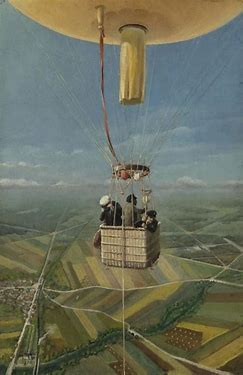
Historical coming of age fiction! An explorer and a downtrodden circus acrobat in a hot air balloon in search of an artifact have an adventure of a lifetime! #historical #books #fantasy #raiders

Research can be taken from real-life situation!
by
Patrick Canning


The word ‘research’ probably conjures up images of dusty library archives, meticulously sourced bibliographies, and maybe even microfiche (if you’re of a certain age). But research for The Colonel and the Bee was some of the most fun I’ve had in writing a book.

Once I had my idea: a destitute acrobat and a flower-obsessed adventurer explore the world of the early 19th Century in a fantastically large hot air balloon, I needed some help filling in the details. The story wouldn’t be beholden to reality at every turn, but I’ve always thought a measure of science makes even the most outlandish fantasy that much better. It was time to do some research.

While I admit going to the Wikipedia well more than I should, I quickly found many other amazing sources of information. Ballooning by C. H. Gibbs-Smith, an antiquated look at the world of hot air ballooning before 1946, provided some great aeronautical theory and history of ballooning. In an ill-visited corner of the upper floor of The Last Bookstore in Downtown Los Angeles (a great place to check out if you’re ever in LA), I discovered Forty Favorite Flowers by Beverly Nichols, a 1970s guide to curious flowers and how they fare in an English garden. Aside from having a great old book smell, Forty Favorite Flowers helped bring the Colonel’s extensive horticultural knowledge into focus. A dictionary of Victorian slang delivered gems like “enthuzimuzzy” (much ado about nothing) and “butter upon bacon” (excessive extravagance), but it was Lina Rivera, The Colonel and the Bee’s editor, who contributed what is probably my favorite bit of Victorian wordage: “chuckaboo” (friend).

By far the most thrilling and enjoyable bit of research was a trip in a real hot air balloon. I took note of all the sensations and emotions that came with the unique way of flying, and paid close attention to the charismatic British pilot’s manner of speaking (“The crown line’s in a bit of a state!” and “A woman can understand a compliment in any language, can’t they?”). The difficulty in controlling a craft as unwieldy as a hot air balloon was made clear with our unscheduled landing on a golf course. Luckily, the irate owner was placated with a handy bottle of champagne.

Imagination might do most of the leg work when it comes to fiction, but I hope all these real-world details help further color the world Beatrix and the Colonel explore, and make for a more engaging and exciting read.

Introducing...
The Colonel and the Bee
Beatrix, a spirited but abused acrobat in a traveling circus, seeks more than her prison-like employment offers. More than anything, she wants to know her place in the world of the halcyon 19th century, a time when the last dark corners of the map were being sketched out and travel still possessed a kind of magic.


Amazon

One night in Switzerland, the mysterious Colonel James Bacchus attends Beatrix’s show. This larger-than-life English gentleman, reputed to have a voracious appetite for female conquests, is most notable for traveling the world in a four-story hot air balloon called The Ox.

Beatrix flees that night to join the Colonel, and the two of them make a narrow escape—Beatrix from her abusive ringleader, the Colonel from a freshly-made cuckold. Beatrix, feeling the Colonel may have the answers to her problems, pledges to help him catch the criminal he seeks in exchange for passage on his magnificent balloon.

The criminal seeks a precious figurine, The Blue Star Sphinx, but he’s not alone. The Sphinx’s immense value has also drawn the attention of the world’s most deadly treasure hunters. A murder in Antwerp begins a path of mystery that leads all the way to the most isolated island on Earth.


Patrick Canning spends as much time as possible turning coffee into collections of words that look like books, shorts, and screenplays.

Most of his stories attempt to look for the meaning of life in an adventurous way, and often employ humor, important since the search usually doesn’t turn up much. He lives in Los Angeles with his dog, Hank.


An extract from The Colonel and the Bee

“Flying the Ox is much more akin to playing an instrument than operating a machine. Approach the challenge less formally, do so with confidence, and the craft’s perfect obedience will be your reward.”

I lost sight of the burner strap and by accident pulled a vent on the main balloon. We began to rotate and descend with great rapidity. The Colonel allowed me to find the correct cord on my own, and I did so just in time as the Ox nearly scraped a rolling pasture hill, startling a herd of brown Belgian cows enough to sour their milk.

Taking care to avoid the ripping line, I continued to bring the Ox up, searching for the northwest wind. To my chagrin, I sent us southeast, and it took a deft intervention from the Colonel to set us right. Applying the correct pressure on the correct combination of cords in the correct sequence did indeed give him the appearance of an accomplished maestro.

“Skill comes with practice, and northwest can be elusive. Northeast can be downright tempestuous,” he said as if recalling a talented snooker rival.

I readied another question, but the Colonel anticipated me. He held up a gentle hand to stay the incoming query, motioned with both hands downward, indicating I should relax, then gestured to the edge of the Ox.

So worried I’d been about that morning’s lesson, I’d hardly taken a moment to observe our environment. I joined the Colonel at the railing, and became lightheaded with wonder. The full effect of flight had been disguised by darkness the previous night, and now, in the maturing light of dawn, I beheld a world transformed by perspective: rivers and mountains were maps come to life, trees were seas of leaves that shimmered emerald in the breeze, even birds flew at a height far below the Ox, moving like schools of fish in currents of wind.

“Toast my bloomin’ eyebrows,” I mumbled, forgoing any attempt at eloquence. “I didn’t know... I couldn’t have imagined...”

“Wonderful, isn’t it? From this height, we’re permitted to see plainly the orchestrations of daily life, rank with crisscrossing motives and the clutter of needless haste. Up here in the rarefied air we are weightless in cool æther, unspoiled by the odour and noise of man’s desires far below.”

We stood side by side, watching the scene in silence, until something in the distance stole the Colonel’s gaze.

“There. Antwerp on the horizon. Drink your leaf juice if you must.”

By now, all of the Manx were flying in a loose halo about the Ox, gently displacing the Belgian mist we floated in as they dove and twisted as birds in play.

“They have such charm and spirit,” I said.

“They detect my excitement. This visit could prove fruitful in our search for the criminal. He’s been most elusive thus far.”

“Do you know the murdered party?”

The Colonel’s face fell a note, but he recovered quickly.

“I’m interested in the criminal.”

“To bring him to justice?” I gulped my tea. “For this or a past transgression?”

“There is plenty to choose from. It is enough for you to know I seek an audience with the man.”

“He has committed other crimes?”

“Certainly.”

“Is he dangerous?”

Most certainly.”

I finished my tea as the green vegetation and black soil of tilled fields shifted to the red brick and grey stone of buildings. Antwerp’s harbour introduced itself to the nose long before the eyes.

The Colonel inhaled deeply.

“Have you been?” he asked.

I shook my head.

“A bastion of crime and seafood, how I adore this city. I apologise as it’s unlikely we’ll have time for a proper tour. Perhaps a return under less harried circumstances. Unfurl those ropes there, won’t you?”

The spiderweb of roadways below passed ever faster as we descended. I let drop a collection of heavy ropes over the side of the Ox as the Colonel set her down in a rather regal park. Despite the posh surroundings, there was an air of danger. Apparently, the Colonel felt it too.

“No chance we’re deflating here,” he said. “Down the steps with you. Help secure us.”